
Finger Prostheses: A Comprehensive Guide for New Users
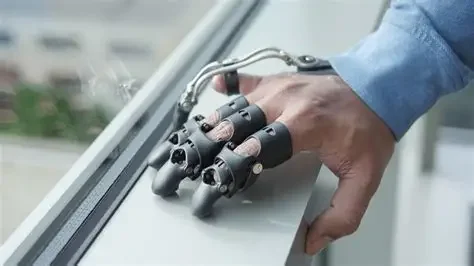
Finger loss—whether due to trauma, infection, or congenital conditions—can have a profound impact on both function and identity. For new amputee patients, navigating the options for finger prostheses can feel overwhelming. However, modern prosthetic technology offers a wide spectrum of solutions, ranging from highly aesthetic silicone restorations to advanced functional devices that restore grip, strength, and dexterity.
This guide provides an overview of finger prostheses, various types, features, attachment methods, considerations for new users, and what leading manufacturers are offering. It is intended to help new patients and referring clinicians understand the options and make informed decisions.
Understanding the Role of Finger Prostheses
Finger prostheses serve three primary purposes:
Functional restoration – improving grip strength, dexterity, and hand biomechanics. Even partial restoration can significantly improve activities such as typing, gripping utensils, or handling small objects. Silicone finger prostheses, for example, provide counter-support for grasping and fine motor tasks like handling coins or using a keyboard.
Aesthetic restoration – recreating natural appearance and symmetry
Psychological rehabilitation – supporting confidence, social integration and identity
Types of Finger Prostheses
Finger prostheses can be broadly classified into three main categories: passive (cosmetic), body-driven (mechanical), and myoelectric (bionic). Each serves different needs.
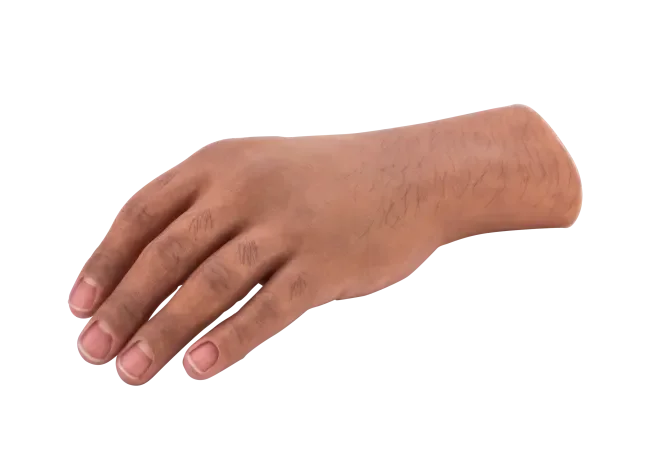
Passive (Cosmetic) Finger Prostheses
Passive prostheses are the most common option for new amputees.
Key Features:
Custom-made from medical-grade silicone or prefabricated PVC
Highly realistic skin tone, texture, and nail replication. Less definition with PVC types.
Lightweight and flexible with natural feel.
Typically non-articulating or slightly positionable
Benefits:
Excellent aesthetic outcome
Improved social confidence and body image
Provides some passive opposition for grasping or pushing objects
Protects sensitive residual tissue
Custom silicone prostheses are designed to closely replicate the appearance of natural skin, including colour gradients and surface details, often making them visually indistinguishable at a glance.
Limitations:
Limited active function
Reduced durability under heavy load
May require periodic replacement due to wear or discoloration
Best suited for:
Distal amputations
Patients prioritising appearance
Low to moderate functional demands
Body-Driven (Mechanical) Finger Prostheses
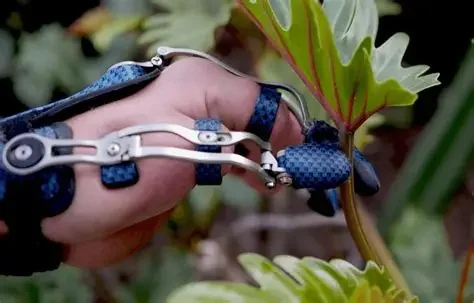
Body-driven prostheses represent a significant advancement in functional restoration.
Examples include devices from the Naked Prosthetics range:
PIPDriver™
MCPDriver™
ThumbDriver™
Key Features:
Mechanical linkage systems driven by residual joint motion
Constructed from durable materials such as nylon or stainless steel
Waterproof and robust
Often include conductive tips for touchscreen use
These devices use remaining joint movement to drive prosthetic motion, enabling intuitive and natural finger function.
Benefits:
Restores active grip patterns (pinch, cylindrical, lateral)
High strength and durability
Suitable for manual work and active lifestyles
Immediate proprioceptive feedback (no electronics required)
Limitations:
Requires sufficient residual limb length and joint mobility
More mechanical appearance (less cosmetic realism)
Higher cost compared to passive options
Best suited for:
Patients prioritising function over aesthetics
Occupational or high-demand users
Positionable (Passive Functional) Prostheses
These are hybrid devices that sit between cosmetic and fully functional solutions.
Key Features:
Adjustable finger positions using external force
Locking mechanisms to maintain grip position
Often integrated into partial hand prostheses
For example, positionable fingers can be flexed manually and locked in place to hold objects, then released via a lever mechanism.
Benefits:
Improved functional utility over purely cosmetic devices
Simpler and more affordable than body-driven systems
Useful for stabilising objects during bimanual tasks
Limitations:
Not actively powered
Requires external adjustment and positioning.
Myoelectric Partial Hand Prostheses
While less common for isolated finger loss, myoelectric systems are relevant in multi-digit amputations.
Examples include systems from Össur and Ottobock:
i-Digits® Quantum
Multi-articulating bionic fingers
Key Features:
Electrically powered by muscle signals
Independent finger movement
Multiple grip patterns (up to dozens)
Benefits:
High level of dexterity
Customisable grip patterns
Advanced functional restoration
Limitations:
High cost
Requires training and maintenance
Heavier and more complex
How Finger Prostheses Are Attached
Suspension and attachment are critical to comfort, function, and long-term success.
Suction Suspension
The most common method for silicone prostheses.
Achieved through a snug, airtight fit
Air is expelled as the prosthesis is donned
Provides secure, discreet attachment
This method is widely used due to its simplicity and reliability.
Mechanical Suspension
Used in partial hand or functional prostheses.
Includes rings, frames, or harness systems
Transfers load through structural components
Common in body-driven devices
Implant-Retained Prostheses (A more advanced option.)
Titanium implant anchored into bone
External attachment via abutment
Provides superior retention and proprioception
Considerations:
Requires surgery
Risk of infection
Higher cost
Adhesion and Compression Fit (Common in silicone designs.)
Relies on material elasticity and friction
Full-contact compression enhances stability
Often eliminates need for straps or closures
Materials Used in Finger Prostheses
Material selection directly impacts durability, comfort, and realism.
Silicone
Most widely used for cosmetic prostheses
Flexible, biocompatible, and lifelike
Allows detailed pigmentation and texture
Nylon
Used in functional prostheses
Lightweight, strong, and resistant to chemicals
Ideal for active users
Metals (Stainless Steel, Titanium)
Provide structural strength
Used in mechanical joints and frames
Enable high load-bearing capacity
Common Considerations for New Amputees
Level of Amputation
Distal amputations → better candidates for cosmetic prostheses
Proximal amputations → may benefit from functional devices
Residual Limb Condition
Length, shape, and soft tissue quality influence fit
Scar tissue and sensitivity must be managed
Functional Goals
Daily living vs occupational demands
Fine motor tasks vs heavy-duty activities
Aesthetic Expectations
Highly individual
Cultural and personal factors play a role
Budget and Funding
Costs vary significantly
Functional devices can be substantially more expensive
Check with your Prosthetist if you qualify for funding.
Complexities in Fitting Finger Prostheses
Finger prosthetics may appear simple, but they are clinically complex.
Precision fitting: Millimetre-level accuracy required for comfort
Volume fluctuation: Residual limb changes over time
Skin tolerance: Pressure and shear must be managed carefully
Alignment: Critical for restoring natural hand biomechanics
Custom fabrication often involves impressions, trial fittings, and refinement to achieve optimal outcomes.
Maintenance and Care
Proper maintenance significantly extends prosthesis lifespan.
Daily Care
Clean with mild soap and water
Avoid harsh chemicals
Dry thoroughly before use
Periodic Maintenance
Inspect for tears or wear
Replace liners or padding as needed
Professional servicing for mechanical devices
Silicone prostheses, in particular, require regular cleaning to prevent staining and maintain appearance.
Notable Manufacturers
The finger prosthetics market includes several globally recognised providers:
Naked Prosthetics
Specialises in functional, body-driven finger prostheses
Industry-leading mechanical designs
Focus on durability and performance
Point Designs
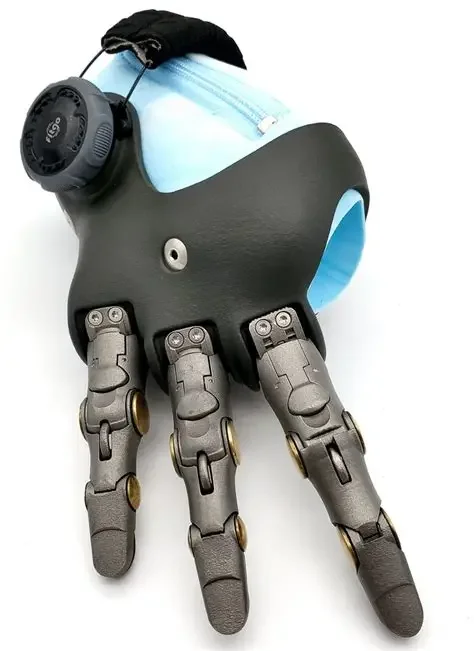
Produces fingers featuring heavy-duty ratcheting mechanisms
3D-printed frames with various suspension options
Ottobock and Ossur (Livingskin)
Provide silicone cosmetic prostheses
Highly detailed, custom aesthetic solutions
Choosing the Right Finger Prosthesis
There is no “one-size-fits-all” solution. The optimal prosthesis depends on:
Clinical presentation
User’s goals
Lifestyle and occupational needs
Budget or funding constraints
A collaborative approach involving the user, prosthetist and rehabilitation team is essential.
Final Thoughts
Finger prostheses have evolved significantly—from purely cosmetic restorations to highly functional, task-specific devices. For new users, the journey begins with understanding the available options and aligning them with personal goals.
Early intervention, appropriate device selection, and ongoing clinical support can dramatically improve outcomes—not just in function, but in confidence and quality of life.
A word from Centric Motion
At Centric Motion, the focus remains on delivering personalised, patient-centred prosthetic solutions that balance aesthetics, function, and long-term usability. Give them a call.